Venezuela: Russian Trace Of Nicolas Maduro’s Crypto Economics
NewsBit News Today2 min read
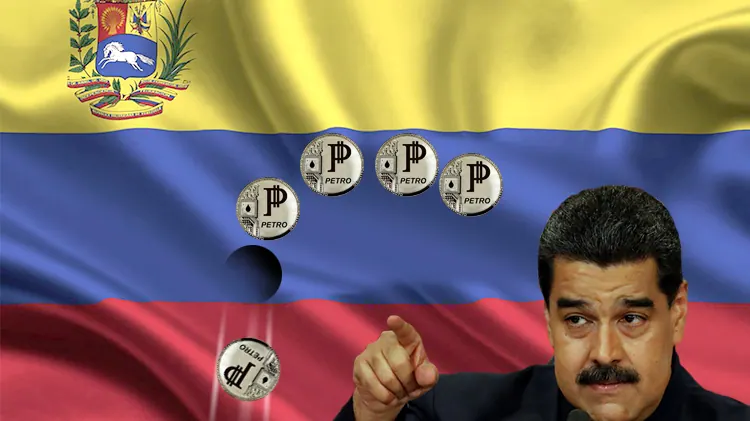
Venezuela launched the sale of a state-backed cryptocurrency, the petro, on Tuesday with Caracas aimed directly against the power of U.S. sanctions.
On the surface, the Venezuela-U.S. battle was about contesting U.S. sanctions. However, an in-depth probe reveals the petro was in fact a collaboration — a half-hidden joint venture between officials and businessmen from Russia and Venezuela and aimed at eroding the power of U.S. sanctions.
During the petro's launch ceremony, Venezuelan President Nicolas Maduro thanked two Russian advisers seated in the front row, Denis Druzhkov and Fyodor Bogorodsky, for assisting his struggle against American "imperialism." It was an explicit display of the collaboration Moscow was fostering with Venezuela as a way to neutralize U.S. sanctions and circumvent financial restrictions.
Maduro hopes the petro will raise up to $6 billion, an initiative that a Russian state bank executive said was overseen by top Kremlin advisers and approved the previous year by President Vladimir Putin. Because the Russian Central Bank resisted a digital ruble over fears of destabilizing the nation's actual currency, Russia urged its Latin American ally to test the cryptocurrency concept on itself instead, according to the banker.
Behind the scenes, it's a shadowy alliance
TIME identified the Russian advisers assisting Maduro only after examining company records and interviewing cryptocurrency investors, finding that both men had connections to major Russian banks and billionaires close to the Kremlin.
Denis Druzhkov was identified as a representative of Aerotrading, an obscure enterprise that helped Maduro develop the petro. Bogorodsky, meanwhile, served as a technical partner on the project and an informal ambassador of Russian culture across Latin America. Maduro proclaimed the petro would serve as a kind of "kryptonite" against the U.S. government, with Bogorodsky's company, Aerotrading, acting as Venezuela's technical partner.
U.S. officials had been monitoring these cryptocurrency efforts since the previous summer, and an executive order by President Donald Trump made it a sanction violation for anyone to buy, use, or help create the petro.
Druzhkov, founder of the Zeus Exchange online trading platform, declined numerous interview requests to discuss his specific role in the project.
Russia's involvement forms part of a wider effort to resist U.S. sanctions and reduce the global financial dominance of Western currencies. Armando Armas, a Venezuelan opposition lawmaker whose National Assembly unsuccessfully tried to stop the petro, told TIME that Russia had made a stronghold in the country and was using it as an experimental test subject.