What is a Mining Farm and how it works
NewsBit News Today1 min read
A mining farm is a specialized facility housing numerous cryptocurrency mining machines, dedicated to the complex task of verifying and adding new transactions to blockchain networks like Bitcoin. These large-scale operations are equipped with powerful ASIC (Application-Specific Integrated Circuit) miners or GPU (Graphics Processing Unit) rigs that run continuously, attempting to solve intricate mathematical puzzles that secure the blockchain.
What is a Mining Farm and how it works
The process begins when a mining farm's software builds a candidate block, which includes the latest Bitcoin transactions. The mining program transmits this header data along with the current target threshold to specialized ASIC hardware. The ASIC miners repeatedly hash the block header using different nonce values. Bitcoin's protocol specifies a target level of difficulty, and the first hash below this target is broadcast to the network.
This process, known as proof-of-work (PoW), means the miners are effectively auditing and verifying transactions. Once a miner finds a qualifying hash, the completed block is broadcast to network nodes for verification, and the miner is rewarded with Bitcoin.
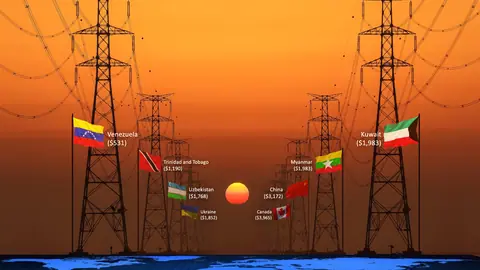
As the network's mining difficulty has increased over time, competing has become much harder for individual miners. Individual miners have struggled to keep up, which is why large-scale mining operations that optimize costs have become the norm. Industry reports indicate that operators, mostly due to cheap electricity, target the lowest-cost power capacity.
Because the machines generate intense heat and consume massive amounts of energy, mining farms invest heavily in cooling systems, reliable power supplies, and network connectivity.
Large-scale facilities have become common for assets like Bitcoin, allowing miners to earn block rewards and transaction fees. As higher difficulty raises barriers for individual miners, large-scale farms stay competitive by optimizing electricity and cooling costs to maximize their rewards.