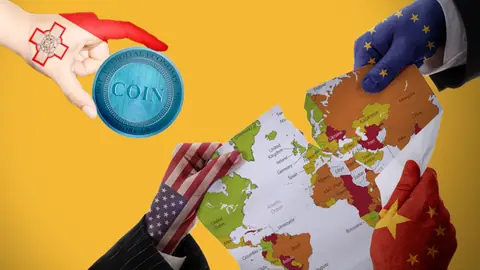
Crypto vs Sanctions Ep. II: Possible, but Only for a While
CryptoBit News Today2 min read
Sanctioned states such as Russia, Iran, Venezuela, and North Korea are increasingly turning to cryptocurrency as a way to bypass restrictive measures imposed by Western nations. Venezuela and Russia, in particular, have been exploring cryptocurrency as a means to continue conducting global business despite international sanctions that limit their ability to transact in U.S. dollars, the world's dominant reserve currency.
Sanctioned States Turn to Crypto: Russia, Iran, Venezuela and North Korea
Russian news portal RBC reported that Iran and Russia might adopt cryptocurrencies to evade Western sanctions, with Iranian lawmaker Mohammad Reza Pourebrahimi stating that Iran's central bank had been tasked with drafting cryptocurrency proposals.
These moves follow Venezuela's earlier initiative to introduce the petro, the first state-backed cryptocurrency in the world. Sources familiar with the effort told TIME that the petro was actually a semi-covert partnership between Russian and Venezuelan officials and business executives designed to weaken American sanctions. The crypto was framed as a counter to the power of the American government, dubbed sarcastically as "Superman" by Venezuelan President Nicolás Maduro.
An executive at a Russian state bank who handles digital currencies told TIME that senior Kremlin advisers supervised the Venezuelan project after receiving President Vladimir Putin's authorization.
Expanding Use and Sanctions-Defense Measures
On January 16th, reports emerged that Russia intends to partner with Iran to create a stablecoin for cross-border trade settlement. This comes as Iran has already been using its vast energy reserves to mine Bitcoin, circumventing sanctions and generating up to $1 billion in revenue since 2018.
In Russia, Vladimir Gutenev, the first deputy head of the State Duma's economic policy committee, urged settling transactions in gold-linked cryptocurrencies to undermine American efforts to block trade in Russian arms and civilian products.
Even North Korea has turned to cryptocurrencies, bringing in an estimated $15 million to $200 million through mining and selling digital currencies, according to Priscilla Moriuchi, a former NSA cybersecurity official.
Limits and Countermeasures
However, three key designers of the Russia sanctions regime told TIME that digital assets will not shield major Russian institutions or banks from restrictions. The U.S. has a key tool in its Specially Designated Nationals List, which essentially keeps sanctioned entities out of the dollar.
The U.S. Treasury Department has made clear it is aware of reports regarding sanctions evasion through cryptocurrencies. In March 2018, Washington responded to Venezuela's efforts to circumvent sanctions through digital currency by banning American citizens from buying or trading the petro.
With more sanction-hit countries chasing cryptocurrency workarounds, the ways sanctions are designed will need to evolve to remain effective against digital assets carrying value linked to sanctioned actors.