DLT: How to Make Money on Freedom of Speech
CryptoBit News Today2 min read
New blockchain-based social media platforms are gaining ground and challenging established services like Facebook.
Bringing Ownership Back to Internet Content Production
On these new decentralized platforms, users are compensated in cryptocurrency for the content they create, share, and curate, ushering in a new era of financial rewards for content creators.
This model stands in stark contrast to the more common scenario, where platform owners alone reap the billions in revenue generated off of users' posts, likes, and messages.
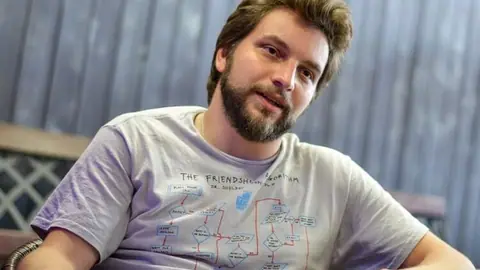
Raffaele Ciriello, an assistant professor at the IT University of Copenhagen, researches how decentralized platforms like Steemit are upending the established social media paradigm.
Ciriello points out that while Facebook users each generate around $1000 in annual value through their digital contributions, that money only goes to Facebook, making the company one of the most valuable in the world.
Redistributing Value to Creators
This rebalancing of value is already transforming lives for some content creators. Ciriello noted that a food blogger with 300,000 YouTube followers made at most $1,000 a month in ad revenue across five years on that channel.
Yet during a single year on Steemit, she generated more than $150,000 worth of Steem dollars sharing the same material.
A single Steem dollar was worth roughly five U.S. dollars. Ciriello shared examples of an African farmer who bought new equipment and animals for the family farm and an American writer who made about $2,000 in January from his Steemit content, posting his blog and podcast.
Innovations in Tokenomics and Curation
According to Ciriello, the most groundbreaking aspect of platforms such as Steemit is that users receive a portion of the value they generate online.
Earnings on the platform are determined by both the total number of votes a post receives and the Steem Power held by each voter. As an article gathers more votes, the payout of Steem distributed to its author grows.
Additionally, Steem Power is granted to users for being good curators and voting on high-quality content, creating a virtuous cycle that incentivizes quality and engagement.
Censorship Resistant but Also Responsibility Free
Because a blockchain manages all communications, user information, content, and distribution, Steemit operates completely without censorship.
This lack of censorship aids individuals living in countries with limited free speech, though content cannot be deleted once posted.
However, the permanence of posting on a blockchain ledger raises thorny legal and ethical challenges. For instance, European privacy regulations mandate that websites remove user data in specific situations.
Samit Singh, chief executive of Decentralized News Network, noted that digital ledgers make it hard to delete defamatory material because the records persist indefinitely. Ciriello highlighted that the inability to remove content carries major potential downsides.